

Cutting Carbon in the Cleanroom: The Truth About Semiconductor Drying
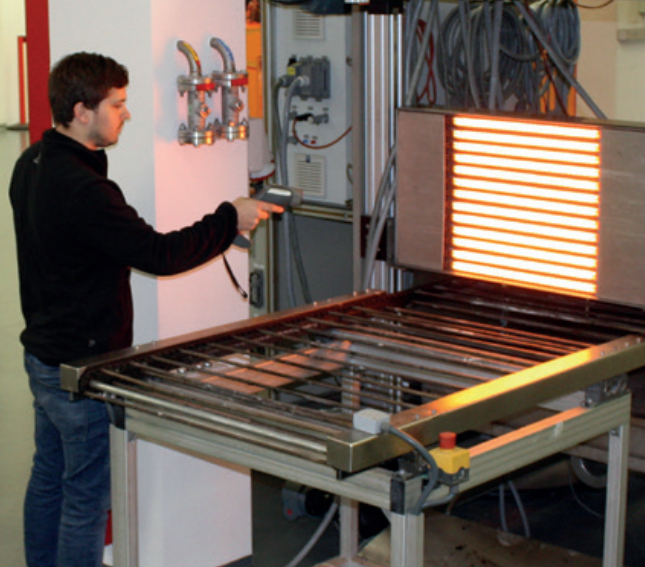
Getting solvents and moisture off a wafer without wrecking the whole thing is a delicate dance. For a long time, we’ve just thrown these things into big convection ovens, heating up the entire room just to dry a tiny piece of silicon. It’s a waste. That’s why switching to digital infrared (IR) controllers makes so much sense. Instead of heating the air around the wafer, you’re hitting the substrate directly. It’s cleaner, it’s faster, and it stops the cleanroom from eating power like a monster. The problem with “close enough” Old-school heating elements are clumsy. They tend to overshoot the temperature, spike, and then crash. You end up in this endless loop of overheating and over-cooling that burns through kilowatt-hours for no reason. We use digital PID controllers to fix this. They tweak the IR lamp output in real-time, keeping things within ±1°C. When you stop that temperature seesaw, your energy bill drops. Simple as that. Why IR actually works Here is the cool part: IR is electromagnetic radiation. It doesn’t need the air to carry the heat; it just goes straight into the material. Because of that, you can ditch the massive airflow systems and the heavy-duty insulation. We use short-wave IR because it penetrates fast. The wafers dry quicker, the equipment runs for fewer hours, and you hit your production numbers without keeping the lights on all night. The catch (because there’s always a catch) Now, don’t think this is just a “plug and play” upgrade for every single line. High-density IR arrays put out a lot of intense, localized heat. If you aren’t careful with your cooling manifolds and heat sinks, you’ll literally cook your own controller electronics. If your chassis wasn’t built to handle that kind of heat load, your components are going to fry way sooner than they should. You’ve got to spec the cooling right. The bottom line on “Green” When you move to digital IR control, the drying stage stops being a carbon-heavy bottleneck. It just becomes a lean part of the process. It really comes down to basic thermodynamics. If you aren’t wasting energy heating up air you don’t need, your CO2 emissions drop. It’s a win for the planet, and a win for the facility.