

Why we’re switching to IR heating for semiconductor trolleys
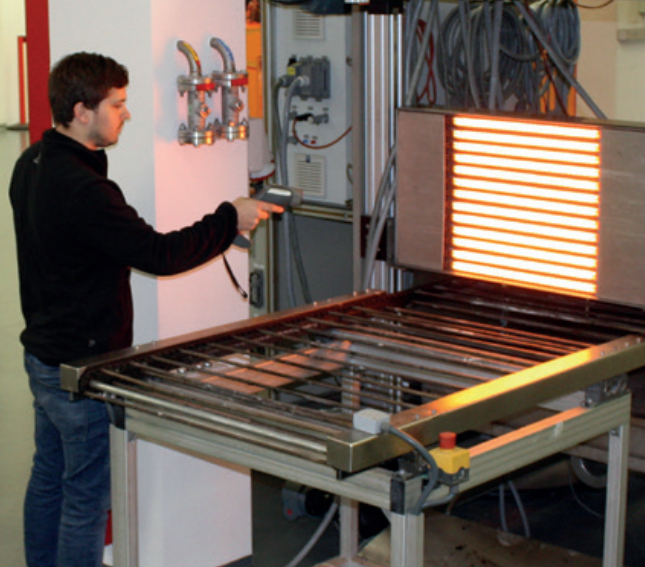
When you’re moving wafers or substrates between stations in deep processing, keeping that temperature steady is everything. For a long time, we just pushed hot air around. But lately, we’ve been moving toward infrared (IR) heating for our cleanroom trolleys, and the difference is night and day. It really comes down to how the heat actually gets to the part.
The problem with waiting on air
Think about forced air. You have to heat the air first, and then the air has to heat the part. It’s slow. Plus, all that blowing air creates turbulence. In a class-100 cleanroom, turbulence is basically a nightmare you don’t want. IR is different. It’s radiant energy. It just hits the substrate directly. We’ve seen warm-up times drop from minutes to literally seconds. When you stop fighting with air mass, your batch time plummets. That’s why you’re seeing IR pop up everywhere in high-throughput lines. It just makes sense.
Getting it set up
Putting IR into a trolley takes some specific gear. We usually go with short-wave quartz lamps. They pack a lot of heat into a tiny space. The best part? No moving parts. No blowers, no fans, no vibration. That means no random particles floating around your workspace. One thing to watch out for is your power supply. If you’re running high-wattage lamps—say, 2000W or more per lamp—you’re pulling a lot of current. Make sure your wiring can handle it, or you’ll run into voltage drops that mess with your heat.
The trade-off
Now, IR isn’t magic. It’s line-of-sight. If your trolley load is uneven or something is blocking the path, you’re going to get cold spots. Air is great at averaging things out, but IR doesn’t do that. You have to be precise with where you put the lamps. If you’re off by just a few centimeters, your whole thermal profile shifts. It takes a bit more planning upfront, but the speed you get in return is worth the effort.