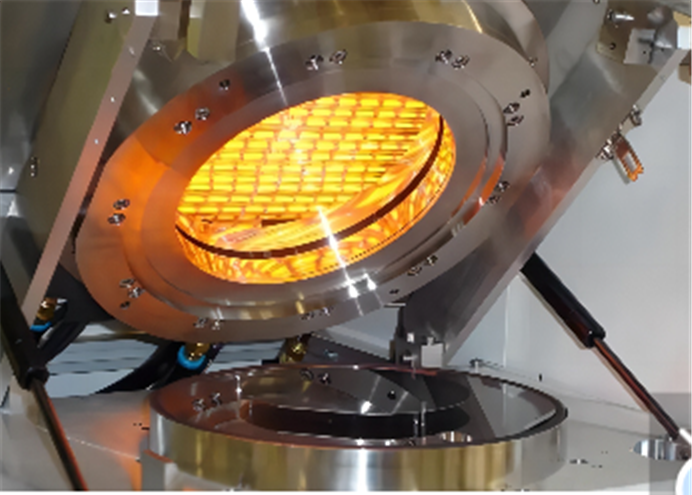
If you’ve ever spent time designing semiconductor clean room ovens, you know the headache of “hot walls.” It’s a classic problem. You use convection heating to warm the air, but that air doesn’t just stay where you want it. It hits everything. Before you know it, the outer cabinet is scorching, which is a nightmare for safety and a total waste of power. We decided to stop fighting the air and just skip it entirely. That’s why we moved to directional infrared (IR) heating. How it actually works Think of IR heating more like a flashlight than a space heater. Instead of warming the whole room, it sends electromagnetic radiation in a straight line. By getting the lamp placement just right and using reflectors, we can aim that energy directly at the wafer or substrate. The heat goes exactly where it needs to go. Since the cabinet walls aren’t in the “line of fire,” they stay cool to the touch. The power (and the catch) When you pack a high-wattage IR array into a small space, the heat density is incredible. It ramps up way faster than any forced-air system I’ve ever used. Plus, you can hit specific zones on a tray without heating up the rest of the chamber. But here’s the thing: it requires a bit more finesse. Because those filaments get incredibly hot, your sensor placement has to be spot on. If your pyrometer is even slightly off, you’ll blow right past your target temperature before the system has a chance to throttle back. It’s a precision game. A safer shop floor The best part? When you aren’t wasting energy heating the walls, you can ditch the bulky insulation and the loud active cooling systems. The machine gets smaller. It looks cleaner. And more importantly, your operators aren’t risking a nasty burn just by leaning against the chassis. You get total control over the part, and a machine that’s actually safe to be around.