

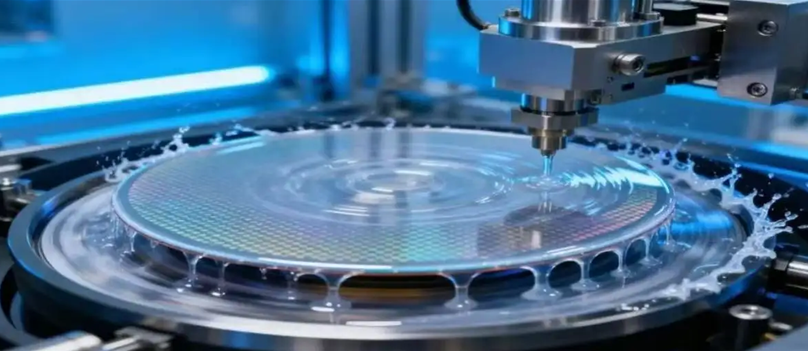
On the lithography floor, you don’t treat soft bake and hard bake as just “temperature steps.” They’re the levers that directly set photoresist profile, critical dimension uniformity, and—bottom line—yield. A 1°C drift, a hot spot, or a particle shed from a tired heater can show up as scumming, footing, or line-width excursions that slip past inspection. We built our infrared replacement heaters to lock down that risk with disciplined thermal control. What matters, technically Our near-infrared emitters heat fast, coupling directly into the wafer with uniformity of ±0.1°C across the active surface—measured under production-equivalent thermal load. The design is quartz-free and low-outgassing, so you get less molecular contamination and no particle shedding, which keeps cleanroom particle counts steady in Class 1–100. Setpoint-to-setpoint repeatability is ±0.3°C over 24 hours, so your photoresist bake profile stays consistent across lots and shifts. The heater body drops into standard hot plate fixtures and works with your existing temperature feedback loops without having to re-qualify the station envelope. Why it holds up in real process In soft bake, you get controlled, repeatable solvent removal—less residual stress and better adhesion. In hard bake, the thermal budget lands precisely, so you avoid reflow defects and keep clean etch and implant windows. The fast thermal response shortens cycle time without overshoot, and the low mass design cuts energy draw during ramp-up and idle. The payoff is stable process windows, fewer rework lots, and maintenance intervals you can plan around. A few things to watch IR replacement heaters are particular about alignment and emissivity differences in the plate stack. During install, you need to calibrate the temperature sensor position and confirm the IR window is clean—otherwise loop gain can drift and uniformity takes a hit. Plan on a quick re-qualification of the bake profile after the swap, using a calibrated thermocouple wafer or an equivalent thermal monitor.