

On the fab floor, a 0.5°C drift during the photoresist bake is all it takes to push critical dimensions out of spec and scrap an entire lot. You don’t need promises. You need a thermal platform that holds steady, shift after shift.
What matters under the hood
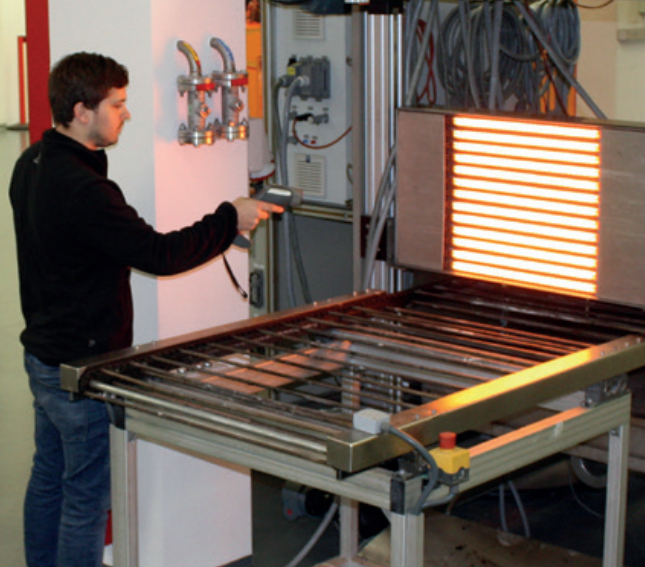
We built the heater around a short-wave infrared emitter and a quartz-stabilized thermal core. It gets to setpoint fast and keeps wafer-level uniformity within ±0.1°C. The package is Class 1–100 cleanroom-compatible and keeps particle generation at zero. The control loop holds setpoint repeatability under 0.05% even when you’re running 24/7. The payoff is a thermal budget you can count on for soft bake, hard bake, and post-exposure bake—no overshoot, no thermal lag.
Why this works in lithography and resist
Yield hinges on temperature stability at the wafer plane, not just at the sensor. Tight uniformity translates into tighter CD control, fewer reworks, and less scrap. When the thermal profile repeats lot after lot, the process window opens up. Faster settling and minimal idle heat loss also cut energy use. Over in packaging, that same stability keeps adhesive cure consistent and controls delamination, keeping thermal stress inside spec.
The things you’ll want to plan for
The unit needs a dedicated power bus and clean, dry coolant to hold long-term stability. Retrofits can be tight inside legacy oven blocks. Plan on a 48-hour burn-in and calibration to lock in the uniformity map. Make sure your machine interface matches the connector and mounting footprint. Once it’s aligned, it runs without interruption. But that upfront integration step is non-negotiable if you want repeatability.