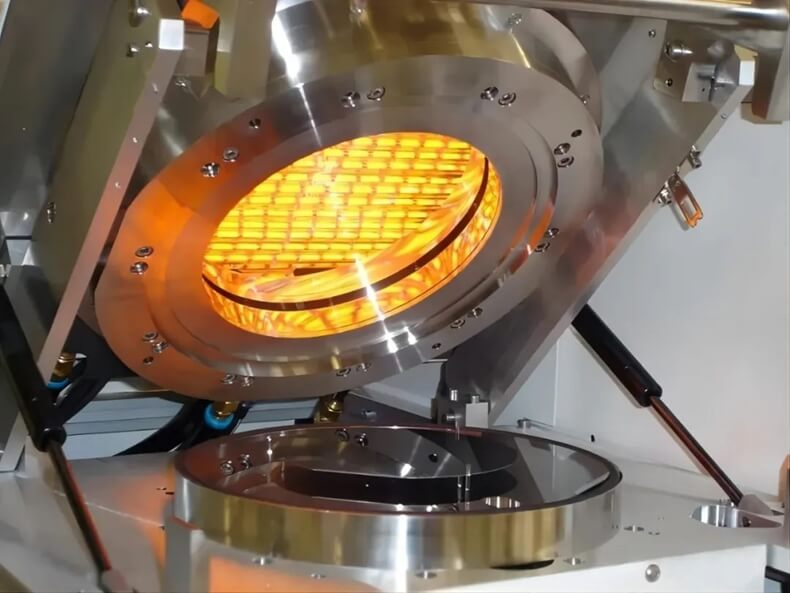
On the lithography floor, you know the drill. A temperature swing of a couple degrees is enough to throw critical dimensions off and turn a whole lot of wafers into scrap. The soft bake and hard bake aren’t just “heating steps.” They’re where you lock in solvent removal, manage film stress, and set the thermal budget that has to survive downstream etch and deposition. When that bake profile drifts, you get scumming, adhesion problems, and line-edge roughness. What actually matters under the hood We’re using a near infrared (NIR) emitter bulb that delivers fast, direct radiant heat with tight thermal control. The spectrum is tuned to be absorbed efficiently by the photoresist stack, so you minimize substrate heating and get a quick response. Across the wafer, we hold ±0.1°C uniformity, so every die sees the same bake condition. Cleanroom compatibility is engineered in: Class 1–100 operation with zero particle generation, backed by low outgassing quartz components and sealed terminations. The emitter runs 24/7 with stable output, and we track repeatability on the same unit over 5,000+ hours with less than 5% intensity drop. Why this approach holds up in practice In soft bake, the NIR profile pulls solvents out fast without skinning the film, which cuts down rework and improves critical dimension control. In hard bake, consistent temperature prevents reflective notching and gives you better adhesion heading into the etch. The payoff is fewer scrap lots, stable process windows, and predictable equipment uptime. You also save energy because the radiant heat targets the resist directly, and the fast thermal response shortens bake time without compromising profile integrity. The practical details you need to get right NIR emitters are sensitive to mounting geometry and line-of-sight to the wafer. You’ll get tighter uniformity when the array is aligned and spaced per the tool spec. During initial integration, you may need to re-tune the bake recipe to match the steeper thermal ramp. Running in low-humidity cleanrooms means paying extra attention to static control when you’re handling the lamp. Install with the specified clearance and drive it within the rated voltage window, and the emitter delivers stable, repeatable bake performance that keeps the process in control.