

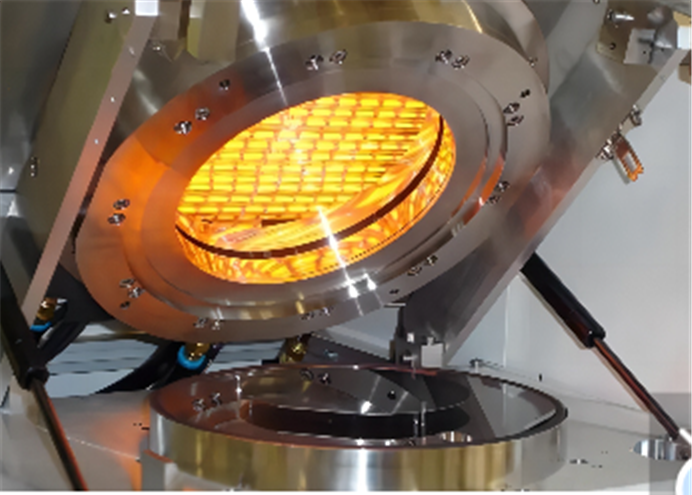
On the lithography floor, a soft bake isn’t just a warm-up. It’s a tightly controlled thermal step that locks down solvent content, sets photoresist adhesion, and directly influences linewidth control. A half-degree drift can shift TMU, and a hot spot can turn into a repeating defect across the wafer. We built the heating element to take that uncertainty out of the thermal budget. What matters in the trenches is performance you can count on when the track is running hard. The heater settles fast, holds steady-state uniformity across the bake surface, and stays clean in a production cleanroom. We see wafer-level temperature control with steady-state uniformity of ±0.1°C across the bake surface, and repeatability within ±0.2°C from batch to batch. Particle generation is kept in check with low-outgassing materials and a surface finish that meets Class 1–100 cleanroom constraints. The response is quick enough to keep cycle time consistent, and the thermal profile stays repeatable around the clock—zero unplanned downtime in the field history. This element is designed for lithography soft bake stations, where temperature accuracy is directly tied to defect reduction and yield. You get consistent photoresist bake performance, fewer scrap wafers, and less rework. Energy use is trimmed through efficient heating and minimal thermal mass, so operating cost comes down without compromising bake quality. The end result is process stability you can document, audit, and stand behind. Before you install, confirm compatibility at the tool level. Check mounting dimensions, terminal configuration, and the available thermal budget. The element will only hit its spec when the station’s temperature sensor calibration and airflow are kept within tolerance. After a tool preventive maintenance event, give it a short warm-up to come back to full precision.